By: Joshua B. Sihombing and Randi Chess
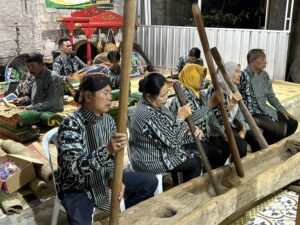
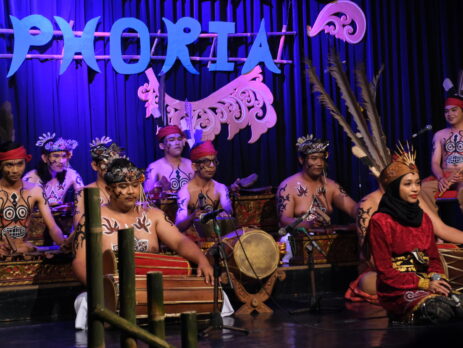
An ethnic music performance entitled “Saling-silang #2” was held at the mini concert of the Department of Ethnomusicology ISI Yogyakarta on December 12-13, 2022. Various arrangements of regional songs of the archipelago were played by Ethnomusicology students who were taking Ethnic Instrument Studies courses. Many regional songs of the archipelago that are rarely heard were played in this musical performance. The songs sounded beautiful with the typical rhythm, melody and harmony from various parts of the archipelago. The lighting game that was so dynamic highlighting the presenters on stage, seemed to spoil the eyes so that each audience could be hypnotized to stay focused on seeing the performance.


The longing for home seems to be treated when watching the songs performed by Ethnomusicology students of ISI Yogyakarta. Many students who are currently studying higher education in Yogyakarta who come from various regions cannot return home at the end of this year, when watching this performance is enough to treat homesickness, especially when the song sung comes from their area. The audience who came, not only students within the scope of the ISI Yogya campus, but also students from various other campuses in Yogyakarta. The presence of students from outside the ISI Yogyakarta campus is not without reason. Brilian Tondang, one of the audience members, revealed his presence, at the invitation of one of the players who performed on December 13. Saling Silang #2 is a final exam performance of the Ethnic Instrument Study course which is packaged in a musical performance. A total of 35 students who took this course were given the task of composing or arranging folk songs originating from outside the presenter's / composer's area. Therefore, the performance was named Saling Silang, which is arranging other regional songs from the presenter using musical idioms from the presenter's region. It was very interesting and very admirable. Not all musicians can compose songs from outside their region.

The Ethnic Instrument Study Course itself is the only course in the Ethnomusicology department of ISI Yogyakarta whose final assessment is in the form of work and performance. This course is taught by 3 lecturers, Mr. Warsana, M.Sn., M. Yoga Supeno, M.Sn., and Ribeth Nurvijayanto, M.A.. In 2021, this event was held online with a video tapping process for 5 consecutive days with 46 work presentations. This year, the Saling Silang #2 event was assisted by Ethnomusicology students from the 2021 and 2022 batches as the production team. On the first day, the event was opened with the process of cutting tumpeng by the three examining lecturers, and on the last day the event was closed with a thanksgiving process of eating bubur sumsum together by the three examining lecturers, all authors, and the entire production team. With a very different process from the previous year, this event succeeded in gaining a lot of appreciation from students of other majors. However, because this is the first event held by the Ethnomusicology department directly after the end of the Covid 19 pandemic, of course there are still many shortcomings. By organizing this event, it is hoped that this event can be the only place for Ethnomusicology students to develop their creativity and innovation. Not only that, through this Ethnic Instrument Study course, Ethnomusicology students can take responsibility for the work presented by using a work accountability paper written after the work performance is complete.
The level of this event should have been raised, not only enjoyed by the closest people of the presenters or performers. This performance can be enjoyed by visitors or tourists who come to Yogyakarta, considering Yogyakarta is one of the favorite tourist destinations in Indonesia & the world. Knowledge of locality, modernization, and education are very prominent in this event. Local elements are combined with modern into a new taste of tones that sound interesting to the ear, and finally become a vehicle for education for the wider community.